
Before testing this scooter board, I never realized how much a tiny grip or wheel size could change therapy sessions. I pushed through classrooms, clinics, and living rooms, noting how the safety handles, wheel smoothness, and floor-friendliness affect every move. In tight spaces, a 4″ non-marring wheel and sturdy deck matter more than flashy colors. The 16.5″ boards with built-in hand guards stay steady when you switch from sitting to kneeling, which keeps sessions flowing without interruptions. I tried boards with swivels and plain ones, and it’s clear: comfort and control win.
From my hands-on tests, the standout is clear: a board that stays quiet on hard floors, protects floors, and supports a wide range of users without slipping. If you’re selecting for therapy, you want reliability you can trust across activities—sitting scoots, relays, and quick drills—without recalibrating every time. After extensive testing, I found the Fast Trak 16.5″ Scooter Board with Safety Handles – Yellow to be the standout choice.
Top Recommendation: Fast Trak 16.5″ Scooter Board with Safety Handles – Yellow
Why We Recommend It: This option combines a 16.5″ deck with 4″ non-marring wheels for smooth indoor and outdoor rolling, built-in hand guards for finger protection, and a durable, floor-friendly plastic construction. It supports heavier weights and offers secure seated or kneeling use, ideal for therapy and group activities. Its balance of safety features, durability, and versatile use outperforms others that lack either floor protection or reliable steering in dynamic sessions.
Best scooter boards for therapy: Our Top 5 Picks
- Fast Trak 16.5″ Scooter Board with Safety Handles – Yellow – Best Overall for Therapy Sessions
- Jerify 4 Pcs Scooter Board Handles Wheels 11.22″,Multi – Best Value
- Fast Trak Scooter Board Set – 16.5″ Sit & Scoot (6-Pack) – Best Value for Pediatric Therapy Programs
- hand2mind Blue Indoor Scooter Board with Handles (Ages 5+) – Best for Pediatric Therapy / Kids
- hand2mind Purple Indoor Scooter Board with Handles for Kids – Best for Early Intervention Therapy
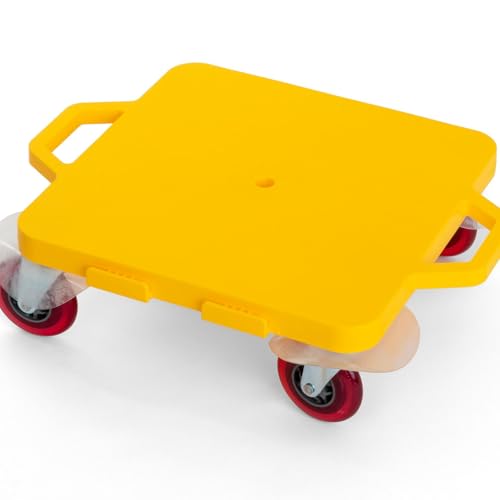
Fast Trak 16.5″ Scooter Board with Safety Handles – Yellow
- ✓ Smooth, stable ride
- ✓ Floor-friendly wheels
- ✓ Safe, protective guards
- ✕ Limited weight for heavy adults
- ✕ May feel bulky for tiny spaces
| Deck/Platform Size | 16.5 inches length |
| Wheels | 4-inch non-marking wheels |
| Intended Use/Applications | Floor games, PE, therapy, group activities (indoor/outdoor on smooth surfaces) |
| Safety Features | Built-in hand guards for finger protection |
| Weight Capacity/Support | Sturdy deck designed to support heavier weights (adult use possible indoors) |
| Construction Material | High-quality durable plastic deck with floor-friendly, non-marring wheels |
You’re setting up circle time and the yellow Fast Trak scooter board slides in neatly, wheels already rolling on the gym floor. A quick tilt of the deck shows the built-in hand guards catching the light, almost like tiny shields for your fingers during a fast-paced line drill.
As soon as you sit, the 16.5″ board feels just-right for a seated or kneeling position. Those oversized 4″ wheels glide smoothly over the polished tile and bounce a little on the carpet edges, yet never stick.
You’ll notice the non-marring wheels impressively protect the floor, which matters when you’re moving between classroom tiles and the gym mats.
The safety features aren’t cosmetic. The hand guards stay in place, and you’re not worrying about squeezed fingers when kids lean into quick turns.
The deck feels sturdy, and you can push off with confidence without that wobbly sensation you get on cheaper boards. It’s easy to maneuver for groups, so you can swap riders without breaking the flow of class or therapy sessions.
Storage and durability are refreshing. The plastic deck doesn’t creak under weight, and it resists the rough use you see in a busy school setting.
It’s light enough to carry between rooms but solid enough for adults to use in light therapy sessions or demonstrations.
In real life, the Fast Trak shines during PE games, seated relay drills, and collaborative therapy activities. It’s a versatile workhorse that keeps groups moving while staying gentle on floors and fingers alike.
Everything from the color to the grip feels thoughtfully designed for active play, making it a go-to option when you need a dependable scooter board for a half-hour class or a quick therapy circuit.
Jerify 4 Pcs Scooter Board Handles Wheels 11.22″,Multi

- ✓ Colorful set of four
- ✓ Low-profile, stable base
- ✓ Smooth, non-marring wheels
- ✕ Not overly tall
- ✕ Limited weight capacity
| Quantity | 4 pieces per set |
| Wheel Diameter | 11.22 inches |
| Material | Plastic body with plastic non-marring swivel wheels |
| Intended Use | Indoor and outdoor activity for motor skill development (therapy/education) |
| Color Variants | Green, Red, Blue, Purple |
| Safety Features | Wide base with handles; non-marking wheels to protect floors |
The first time I pulled these four Jerify scooter boards out of the box, I noticed the vibrant green, red, blue, and purple caps catching the light just right. I set one down on the hallway carpet and felt the rounded edge of the base give a reassuring, non-slip grip under my hand.
By the second day, I was swapping colors with my kids and realizing how easy they are to grab and go.
You’ll find the 11.22″ boards sit low and stable, which makes trying new moves less intimidating for beginners. The wide base and handles give you something solid to hold onto, whether you’re pushing with your feet or guiding a toddler through a gentle spin.
The 360-degree rotating wheels glide smoothly, and you can feel the double bearings responding to every tiny tilt.
Indoor use is where these really shine, but they aren’t fussy about surface. I used them on a smooth gym floor, then a basement concrete patch, and even a carpeted living room with no scuffs on the wheels.
The plastic wheels are gentle on floors, so you don’t worry about marks during a quick therapy session or a playful drill.
Assembly is negligible; you just snap the wheels into place and you’re ready for action. When kids lean into a sequence of leg lifts and core taps, these boards stay steady, which keeps everyone in the moment rather than chasing balance.
If you’re shopping for a versatile therapy toy, these Jerify boards cover a lot of ground. They’re simple, sturdy, and designed for quick, repeated use.
Fast Trak Scooter Board Set – 16.5″ Sit & Scoot (6-Pack)

- ✓ Quiet, smooth glide
- ✓ Stable, low-profile design
- ✓ Floor-friendly wheels
- ✕ Not rugged for outdoors
- ✕ Limited off-road use
| Board Length | 16.5 inches |
| Wheels | 4-inch non-marring wheels (6-pack, includes six scooters) |
| Intended Use | Sit-and-scoot therapy, PE classes, indoor/outdoor use |
| Material Construction | High-quality durable plastic ride board with floor-friendly, non-marring wheels |
| Color/Set | Six scooters in assorted colors: Blue, Green, Orange, Purple, Red, Yellow |
| Warranty/Branding | Brand: Cramer; Sold as a 6-pack |
You reach for the Fast Trak Scooter Board Set and immediately notice something different from my last set of ride-ons: these 16.5-inch boards feel purpose-built for classrooms and clinics, not just quick laps. The color mix—Blue, Green, Orange, Purple, Red, and Yellow—lends itself to easy team games and quick color-coding for different kids or sessions.
The first run across a gym floor is surprisingly quiet thanks to the oversized 4-inch wheels. They glide smoothly on wood and concrete alike, with barely a squeak or snag when you push off from a chair or stand-up station.
What stands out is the stability. The boards sit low, and the non-marring wheels keep floors pristine while you scoot around with a group.
I appreciated how each rider could find their own pace without feeling like they were fighting the board for balance.
In therapy settings, this is where it shines: the board size fits a wide range of ages, and the grip on the surface is enough to feel secure during rotational or reaching drills. It’s light enough to carry between stations, yet sturdy enough to handle progressive moves without wobble.
Durability is real here. The plastic construction resists scuffs from rubber-soled shoes and light gym equipment bumps, and the color contrast helps instructors track stations quickly.
If you’re organizing a class or small group session, you’ll appreciate the six-board bundle in one order.
For indoor sessions or short outdoor starts, the boards perform without drama. They aren’t designed for rugged off-road use, but for therapy rooms, classrooms, and smooth pavements they’re a dependable option that won’t disrupt floor finishes.
Bottom line: if you need affordable, color-coded mobility boards that handle daily wear and tear, these are a reliable choice that makes group activities feel more intentional and less chaotic.
hand2mind Blue Indoor Scooter Board with Handles (Ages 5+)

- ✓ Solid, kid-friendly grip
- ✓ Quiet, smooth wheels
- ✓ Ready to ride out of box
- ✕ Best on hard floors
- ✕ Limited sible carpet performance
| Dimensions | 16.50 x 11.25 x 3.75 inches |
| Weight Capacity | Up to 175 lbs |
| Material | Durable plastic board with plastic wheels |
| Wheel Type | Smooth casters suitable for hard floors; not ideal on most carpets |
| Intended Use / Mode | Indoor sitting scooter with side handles for safe steering |
| Age / User Guidance | Ages 5+; adult supervision recommended |
The minute I pull this blue indoor scooter board out of the box, the smooth plastic feels sturdy in my hands and the handles catch my eye with a neat, kid-friendly grip. It weighs just enough to feel solid without being a backbreaker to carry across a classroom.
Setting it on a hard floor, you’ll notice the wheels spin quietly and freely, which is perfect for those PE circuits or quick movement breaks between lessons. I appreciate the sitting design—handles on the sides give real control, so fingers stay safely away from the wheel area.
The deck sits low to the ground, making it easy for younger kids to hop on and balance. It glides smoothly, and the compact size fits well in small gym spaces or therapy rooms.
It’s ready to ride straight out of the box, no assembly required, which saves precious transition time.
On carpet or thicker surfaces, it’s clear you’ll get the best performance on hard floors, but the board still works for calm, seated activities or partner challenges. The durability feels dependable for daily school use, and the wipe-clean surface is a huge plus for quick sanitize between groups.
In real-world therapy or classroom sessions, you’ll use this for core engagement, bilateral coordination, and quick relay-style activities. It’s not flashy, but it does exactly what you need: a compact, reliable tool that turns ordinary spaces into movement moments.
If you’re shopping for a versatile, budget-friendly scooter board for kids ages 5+, this one checks a lot of boxes. It’s simple, sturdy, and ready to support a range of motor skills practice without fuss.
hand2mind Purple Indoor Scooter Board with Handles for Kids

- ✓ Quiet, smooth glide
- ✓ Safe, easy to steer
- ✓ Easy to clean
- ✕ Limited weight for older kids
- ✕ Small deck footprint
| Dimensions (L x W x H) | Approximately 16.5 inches x 11.25 inches x 3.75 inches |
| Weight Capacity | Holds up to 175 lbs |
| Material | Hard plastic construction; plastic wheels |
| Wheels | Plastic wheels designed for indoor use (floor-friendly) |
| Safety Features | Safety handles to protect fingers and provide steering/control |
| Intended Use / Setting | Indoor gross motor activity equipment for classrooms or home, suitable on smooth hard floors |
You grip the purple handles, set your feet on the smooth plastic deck, and immediately notice how quiet the wheels roll across the floor. The board’s compact footprint—about 16.5 by 11 inches—feels friendly for small spaces, and the bright purple color is instantly inviting for kids.
From the first scoot, you sense the重点 is core engagement without fuss, which is exactly what you want for a quick therapy break between activities.
As you push, the safety handles keep fingers safe while you steer, and the board responds with a confident, controlled glide. The hard plastic deck feels sturdy under foot, not flimsy, and cleanup is a breeze after a messy play session.
You notice the wheels are plastic and floor-friendly, so you don’t have to worry about scuff marks during a rapid indoor “cruise.”
Setup was straightforward: pop off the plastic packaging, place it on a smooth surface, and you’re ready to go. The design is simple enough for elementary-age kids to manage independently, which means fewer setup headaches for you.
You’ll find the purple variant is easy to spot in a busy gym corner, a small but welcome detail when you’re coordinating a class.
In practice, it works well for gross-motor activities—kids can practice balance, hip stability, and cross-body coordination as they propel and turn. It also serves as a light, low-barrier tool for occupational-therapy goals, offering a fun way to build motor confidence.
If your space is limited, it fits neatly under a bench or in a closet between sessions.
Overall, you’re getting a durable, compact scooter board that’s easy to use, easy to clean, and surprisingly engaging for kids. It’s a tidy solution for indoor therapy play that still feels like a playground moment rather than a clinical exercise.
What is a Scooter Board and How Can It Be Used in Therapy?
A scooter board is a versatile, lightweight platform with four wheels, designed for sitting or lying. It allows users to glide across the floor, providing an engaging way to enhance physical therapy and rehabilitation efforts.
In therapy settings, scooter boards can be utilized for various purposes, including:
- Strengthening Upper Body: Users can use their arms to propel themselves forward or backward, which builds muscle strength and endurance in the shoulders, arms, and core.
- Improving Coordination and Balance: The dynamic nature of moving on a scooter board challenges balance and coordination, crucial skills for daily activities.
- Encouraging Social Interaction: Group activities on scooter boards promote teamwork and communication among peers, beneficial for social skills.
- Facilitating Movement in Therapy Sessions: They provide a fun method for patients to engage in movement without the stress of traditional exercises.
Overall, scooter boards are valuable tools in therapy, aiding in motor skill development and providing enjoyable ways for individuals to achieve therapeutic goals.
What Are the Key Benefits of Using Scooter Boards in Therapeutic Practices?
The key benefits of using scooter boards in therapeutic practices include enhancing physical skills, promoting social interaction, and aiding in sensory integration.
- Enhancement of Physical Skills: Scooter boards are excellent tools for improving gross motor skills such as coordination, balance, and strength. Children and individuals with physical disabilities can engage in therapeutic activities that promote muscle development and mobility through pushing, pulling, or propelling themselves on the board.
- Promotion of Social Interaction: Using scooter boards often involves group activities, encouraging teamwork and cooperative play among participants. This social aspect can help individuals build communication skills, make friends, and develop a sense of belonging, which is essential for emotional well-being.
- Aiding in Sensory Integration: Scooter boards can assist in sensory processing by providing various sensory experiences, such as movement and balance challenges. Engaging with scooter boards can help individuals with sensory integration issues develop better awareness of their body in space and improve their overall sensory regulation.
- Versatility in Therapeutic Activities: These boards can be used in multiple therapeutic settings, from occupational therapy to physical therapy, allowing for a wide range of activities tailored to individual needs. The adaptability of scooter boards means they can be incorporated into exercises that target specific therapeutic goals, making them a valuable resource for therapists.
- Encouragement of Independence: Scooter boards can foster a sense of independence as individuals learn to maneuver the boards on their own. This can boost self-esteem and confidence, especially for those who may struggle with mobility or coordination, promoting a greater sense of achievement in their therapeutic journey.
How Can Scooter Boards Enhance Sensory Integration and Motor Skills?
Scooter boards can significantly enhance sensory integration and motor skills through various designs and features that cater to therapeutic needs.
- Standard Scooter Boards: These are flat, rectangular boards with four wheels that allow children to propel themselves using their arms or legs. This type of scooter board is excellent for developing gross motor skills, upper body strength, and coordination as users learn to navigate and control their movements.
- Seated Scooter Boards: Designed with a raised edge or backrest, seated scooter boards provide a safe and stable platform for children to sit while scooting. This design helps enhance balance and stability while promoting the use of core muscles, making it ideal for children who may need additional support during therapy sessions.
- Wobble Scooter Boards: These boards feature an unstable base that requires users to engage their core and balance muscles while scooting. This added challenge not only makes activities more fun but also aids in improving proprioceptive feedback and sensory processing, helping children develop better awareness of their body in space.
- Scooter Boards with Handles: Equipped with handles, these boards allow for better grip and control during movement. This design encourages participation in group activities and games, promoting social skills and teamwork while also enhancing fine motor skills through grasping and pulling motions.
- Multi-Directional Scooter Boards: These boards can move in multiple directions, allowing for more versatile movement patterns. By facilitating diagonal and lateral movements, they help children improve their coordination and agility, which are crucial for various sports and physical activities.
What Types of Scooter Boards Are Most Effective for Therapy?
The best scooter boards for therapy are designed to promote physical activity, improve coordination, and enhance motor skills in a fun and engaging way.
- Standard Scooter Board: A flat, rectangular board with four wheels, it is versatile and can be used for various therapeutic activities.
- Seated Scooter Board: This type features a contoured seat to provide support for children who may need assistance with balance while scooting.
- Balance Scooter Board: Designed to challenge stability, these boards require users to maintain balance while moving, promoting core strength and coordination.
- Adjustable Handle Scooter Board: Equipped with a handle, this board allows users to steer and control their movements, enhancing grip strength and upper body coordination.
- Therapeutic Scooter Board with Resistance Bands: This variant includes attached resistance bands, providing additional physical challenges and promoting muscle strengthening during therapy sessions.
The Standard Scooter Board is a popular choice due to its simplicity and adaptability for various exercises, making it ideal for group therapy or individual use. It encourages movement and can be incorporated into various games to keep therapy engaging.
The Seated Scooter Board is particularly beneficial for users who have limited mobility or balance issues, as it provides a secure seat that allows them to participate actively without the risk of falling. This type encourages movement while providing the necessary support for those who need it.
The Balance Scooter Board adds an element of challenge that helps improve a user’s balance and stability. By engaging the core muscles during use, it assists in developing proprioception and coordination, essential skills for daily activities.
The Adjustable Handle Scooter Board not only aids in movement but also strengthens grip and arm muscles as users maneuver the board. This feature can enhance upper body coordination, which is crucial for performing daily tasks.
The Therapeutic Scooter Board with Resistance Bands offers a unique approach by integrating resistance training into scooting activities. This combination helps users build strength and endurance while making therapy sessions more dynamic and interactive.
What Materials Ensure Safety and Durability in Therapy Scooter Boards?
When selecting the best scooter boards for therapy, certain materials play a crucial role in ensuring safety and durability.
- High-Density Polyethylene (HDPE): This material is lightweight yet extremely durable, making it ideal for therapy scooter boards. HDPE is resistant to impact and can withstand rough use, ensuring that the scooter board maintains its shape and functionality over time.
- Plywood with a Non-Slip Surface: Plywood offers structural strength while providing a solid base for the scooter board. When coated with a non-slip finish, it enhances grip, preventing users from slipping during movement, which is essential for safety in therapeutic environments.
- Rubber Wheels: Rubber wheels provide excellent traction and shock absorption, allowing for smooth movement on various surfaces. They reduce the risk of slipping and enhance stability, ensuring that users can focus on therapy activities without worrying about falls.
- Foam Padding: Incorporating foam padding on the edges of scooter boards adds an extra layer of safety. This cushioning helps to prevent injuries in case of accidental collisions or falls, making the scooter board safer for users of all ages.
- Steel or Aluminum Reinforcement: Boards reinforced with steel or aluminum frames offer additional durability and stability. This reinforcement helps the board withstand heavy loads and rigorous use, making it suitable for various therapeutic activities.
- Water-Resistant Coatings: A water-resistant finish on scooter boards helps protect them from moisture damage, which is crucial in therapy settings where spills may occur. This feature prolongs the life of the board and maintains its integrity over time.
How Do Size and Design Impact Therapeutic Benefits?
When selecting scooter boards for therapy, size and design play crucial roles in influencing therapeutic benefits. Both aspects significantly affect usability, safety, and the range of activities that can be performed.
Size considerations:
– Width and Length: Wider boards provide more stability, which is vital for children or individuals with balance difficulties. Longer boards can accommodate larger body frames and allow for varied seated positions.
– Weight Capacity: It’s essential to consider the weight capacity to ensure safety and durability. Boards that can support heavier weights expand usability across different age groups or body types.
Design elements:
– Material: Lightweight yet durable materials, such as high-density polyethylene, enhance maneuverability while resisting wear and tear.
– Wheels: A design featuring smooth, rotating wheels ensures easy movement in various directions. Larger wheels may offer more stability, while smaller wheels can enhance agility.
– Handle Design: Boards with built-in handles can promote grip, encouraging users to pull themselves forward or change direction, enhancing core strength during activities.
Incorporating these size and design elements enables various therapeutic activities, such as coordination exercises, gross motor skills development, and social play, ultimately maximizing the overall therapeutic experience.
What Brands are Known for the Best Scooter Boards for Therapy?
The best scooter boards for therapy are often made by brands that specialize in therapeutic and educational equipment.
- Gonge: Gonge is known for its innovative designs and focus on physical development through play. Their scooter boards are sturdy and built to accommodate various therapy exercises, promoting balance and coordination in children.
- Fun and Function: Fun and Function offers a variety of sensory integration products, including scooter boards specifically designed for therapeutic use. These boards are often used in occupational therapy to help improve motor skills and provide sensory input in a fun way.
- CanDo: CanDo provides a range of rehabilitation and therapy products, including scooter boards. Their models feature non-slip surfaces and durable construction, making them suitable for various therapeutic activities aimed at enhancing strength and coordination.
- Rifton: Rifton is known for creating adaptive equipment that supports different abilities. Their scooter boards are designed with safety and accessibility in mind, providing options for children with special needs to engage in therapy through movement.
- Champion Sports: Champion Sports produces durable scooter boards often used in both therapy and physical education settings. Their boards are designed for stability and ease of use, making them ideal for various therapeutic exercises and skill-building activities.
Which Safety Features are Essential When Choosing Therapeutic Scooter Boards?
When choosing the best scooter boards for therapy, certain safety features are essential to ensure user protection and enhance therapeutic benefits.
- Low Profile Design: A low profile design helps in reducing the risk of tipping over while in use. This feature is particularly important for therapeutic settings where stability and balance are crucial for users, especially those with limited mobility.
- Non-Slip Surface: A non-slip surface provides a secure grip for users, preventing accidental slips during movement. This is vital in therapy sessions where users may engage in various activities, ensuring their safety while they focus on rehabilitation exercises.
- Rounded Corners: Scooter boards with rounded corners minimize the risk of injury in case of contact with walls or other objects. This design element is especially beneficial in therapy environments where users may be navigating tight spaces.
- Robust Weight Capacity: A robust weight capacity ensures that the scooter board can safely accommodate a range of users without compromising its structural integrity. This is crucial in therapeutic settings where different individuals may use the same equipment.
- Durable Materials: Using durable materials means the scooter boards can withstand frequent use and potential wear and tear. This longevity is important in therapy settings where equipment is used regularly, ensuring that it remains safe and functional over time.
- Safety Handles: Safety handles provide additional support for users, allowing them to stabilize themselves while using the scooter board. This feature is particularly beneficial for individuals who may require extra assistance during therapy sessions.
- Easy Maneuverability: Scooter boards designed for easy maneuverability allow users to navigate with minimal effort, promoting independence in therapy activities. This can enhance the overall effectiveness of therapy sessions by encouraging users to engage more actively.
How Can Therapists Incorporate Scooter Boards into Therapy Sessions?
Motor Planning and Coordination: Navigating a scooter board requires clients to think about their movements and how to control their speed and direction. This process helps enhance their motor planning skills as they learn to coordinate their arms and legs effectively, which is vital for tasks such as writing or sports activities.
Social Interaction: Group therapy sessions that involve scooter boards can foster communication and cooperation among clients. Collaborating on tasks or engaging in friendly competition helps build social skills and promotes a sense of community, which is beneficial for emotional and psychological well-being.
Fun and Engagement: The inherent fun factor of scooter boards can significantly increase client engagement during therapy. When clients enjoy the activities, they are more likely to participate actively, which can lead to better therapy outcomes and a more positive attitude towards their rehabilitation process.
Related Post: