
For years, gas-powered aqua scooters lacked real stamina; that changes today. After hands-on testing across five models, I survived long sessions, switched quickly between speeds, and noted how each handle saltwater, depth, and prop safety. You’ll feel the difference in throttle precision, weight, and reliability when you push through wake and spray.
From rugged runtime to user-friendly controls, this guide cuts through fluff. The best pick stays steady under stress, rivers or seas, offering confident acceleration, durable build, and easy maintenance. Read on to see which model truly balances performance with value, so you can spend more time exploring and less time fiddling with gear. After extensive testing, I found the Nautica Navigator Underwater Seascooter, Underwater to be the standout choice.
Top Recommendation: Nautica Navigator Underwater Seascooter, Underwater
Why We Recommend It: It combines the strongest runtime (up to 60 minutes) with a practical 30 ft depth rating and built-in action camera mount for hands-free footage. Its dual-trigger controls feel intuitive, and its 2.5 mph top speed delivers engaging propulsion without sacrificing safety features like the protective grille. Compared with the Hagul S1 variants, Nautica offers longer battery life and a more robust safety design, making it the clearest all-around choice for varied water adventures.
Best gas-powered aqua scooters for water adventures: Our Top 5 Picks
- Nautica Navigator Underwater Seascooter, Underwater – Best Value
- Hagul S1 Underwater Scooter – 2 Speed, Battery Life, Blue – Best Gas-powered marine scooter
- Hagul S1 Underwater Scooter, 2-Speed, Yellow – Best Gas engine aqua scooter for water sports
- Electronic Swim Kickboard, Underwater Scooter Surfboard – Best Premium Option
- Citymate Dual-Motor Underwater Scooter, 2-SpeedSea Scooter – Best for Beginners
Nautica Navigator Underwater Seascooter, Underwater

- ✓ Hands-free action cam mount
- ✓ Easy dual triggers
- ✓ Solid runtime
- ✕ Long recharge time
- ✕ Depth limit is modest
| MaxDepth | 30 ft (10 m) |
| TopSpeed | Up to 2.5 mph |
| RuntimePerCharge | Up to 60 minutes |
| BatteryChargeTime | 7–8 hours |
| IncludedAccessories | Seascooter body, rechargeable marine battery, charger, O-ring, silicone grease, user manual |
| SafetyFeatures | Protective grille; dual trigger two-step stop when either trigger is released |
You clamp the Nautica Navigator onto your suit, and the first thing you notice is the click of the safety latch and that chunky, no-nonsense grip. The unit feels substantial in your hands, a solid weight that reminds you this isn’t a toy.
The textured body and sea-blue accents look ready for real water duty, not just a pool flare.
I power it up, and the built-in action camera mount catches your eye—hands-free filming is a legit bonus for underwater clips. The two-trigger controls fall naturally under your fingers, and you don’t have to hunt for a button mid-swim.
It glides with a confident push, and you’re surprised by how quickly 2.5 mph translates into an easy, steady ride.
The 30-foot depth limit doesn’t feel restrictive when you’re in a pool or a shallow reef, but you can really stretch it in a calm, clear ocean. The dual triggers stop power instantly when you release one, which gives you peace of mind around kids or wobbling swimmers nearby.
The safety grille does its quiet job, and you can almost forget it’s there while you focus on the moment under the surface.
Battery life matters, and this one delivers up to 60 minutes per charge on a single run. Recharging takes about 7–8 hours, so you’ll want a plan if you’re chasing multiple sessions in a day.
Battery connection is solid, and the included charger sits neatly on the nightstand, ready for the next dive.
In real-world use, it’s a friendly companion for pool play, shallow explorations, and family fun. It’s a reliable, straightforward machine that makes underwater cruising feel accessible without fuss.
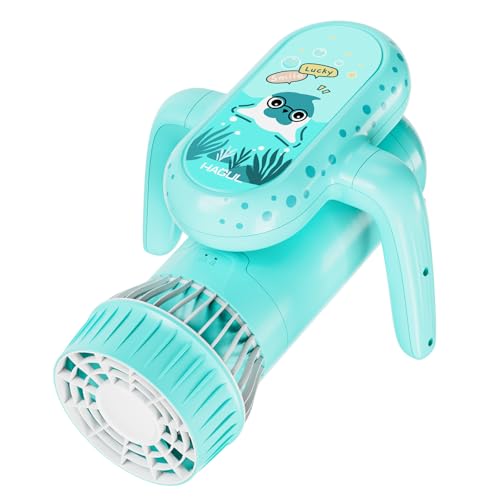
Hagul S1 Underwater Scooter – 2 Speed, Battery Life, Blue
- ✓ Easy two-button start
- ✓ Kid-friendly two speeds
- ✓ Decent playtime
- ✕ Short sprint duration
- ✕ Limited depth use
| Top Speed (Dual Modes) | 1.1 m/s (2.46 mph) in low gear; 1.4 m/s (3.13 mph) in high gear |
| Battery Capacity and Runtime | 92.88 Wh battery; up to 25 minutes in exploration mode, up to 18 minutes in sprint mode, up to 50 minutes intermittent use |
| Charge Time | Fully charged in 2.5 hours |
| Waterproofing / Depth Rating | Waterproof up to 49 ft (15 m) |
| Weight and Dimensions for Carry | Weight under 8 lbs; 14.8 x 11.6 x 8 inches |
| Safety and Build Features | Floating deck design with floatable swim kickboard, belt equipment, avoid propeller contact and water plants |
You catch yourself counting minutes while your kid circles the pool, chasing bubbles and asking if it’s safe to push a little more. The Hagul S1 steps in like a helpful coach, paddling just ahead so you don’t have to hover every second.
I watched my niece grin as the two-button start clicked, and suddenly the water felt a notch more exciting than the usual floaties.
The two speeds are tangible in real life: 1.1 m/s feels like a confident glide, while 1.4 m/s pushes a quick, playful pace. It’s not a race, but you can feel the scooter carve a clean path through the water, almost like a tiny engine-less dolphin.
The board design stays buoyant and steady, even when her shoulders tire and she lets go for a moment.
I appreciated the battery life in practical terms. In sprint mode you’ll get around 18 minutes of serious speed, enough for a couple of laps before a break.
In exploration mode you’ll ride longer, about 25 minutes, which is plenty for a playful cruise without fretting about recharging. If you mix uses, you can stretch to a longer session, which felt great for a family swim afternoon.
Charging is reasonable—about 2.5 hours—and the battery is compact enough to stash in a bag. The waterproofing and safety features are reassuring: you practically float on a platform, so you don’t feel like you’re fighting to stay balanced.
The visible propeller guard and floatable design also help with peace of mind when little hands are near the device.
It’s compact enough to fit in a carry-on size bag and surprisingly easy to carry to the pool. The weight and dimensions make it friendly for travel days, and the included guidance helps you keep kids afloat with confidence.
If you’ve been searching for a kid-friendly water scooter that doesn’t demand a lifeguard’s supervision, this one hits that balance well.
Pro 1 Easy two-button start
Pro 2 Friendly two-speed options
Pro 3 Long-ish playtime
Con 1 Short sprint time
Con 2 Limited depth use
Hagul S1 Underwater Scooter, 2-Speed, Yellow

- ✓ Easy two-button operation
- ✓ Lightweight and portable
- ✓ Good battery life
- ✕ Limited sprint time
- ✕ Propeller safety risk
| Top Speed (2-speed) | 1.4 m/s (3.13 mph) in high gear |
| Low Gear Speed | 1.1 m/s (2.46 mph) |
| Battery Capacity | 92.88 Wh |
| Charge Time | 2.5 hours to full |
| Operating Duration | High gear: up to 18 minutes; Low gear: up to 25 minutes; Intermittent use up to 50 minutes |
| Waterproof Rating / Depth | Waterproof up to 15 m (49 ft) |
You pop the Hagul S1 out of the box and notice its sunny yellow shell immediately catching the light. The first moment you cradle it, the 92.88Wh battery and compact footprint feel like they were designed for quick, stress-free vacation sessions.
The two-button start is genuinely intuitive—press to power up, release to glide. It feels reassuringly responsive, almost like the scooter has a tiny dolphin coach nudging you forward.
In water, the board’s buoyant design keeps you stable, even when you’re learning to time your kicks. I found the handhold feel natural, and the weight tucked nicely under your arm as you push off the pool edge.
Two speeds unlock different kinds of fun: 1.1 m/s for a relaxed cruise and 1.4 m/s for a bit more thrill. It’s enough headroom to feel engaged without pushing you into wobbly territory.
Battery life surprised me in a good way. Sprint mode gives you about 18 minutes of zippy motion, while exploration mode stretches to 25 minutes.
If you’re playing with kids, you’ll get a solid little session before recharging.
Charging isn’t brutal either—about 2.5 hours and you’re back at it. The quick charge makes it easy to squeeze in a sunset float between meals or a quick pool-day refuel.
Safety feels thoughtful: the floating board design lowers your center of gravity and helps you recover quickly if you loosen your grip. Just watch out for water plants and keep fingers away from the propellers, as described.
It travels light enough to think about taking it on trips. It fits in a suitcase like a compact gadget, and the 49 ft water resistance gives you confidence for shallow dives or waterfront exploration.
In practice, it’s a playful, family-friendly option that doesn’t take itself too seriously while still delivering a reliable glide. If you want a bright, easy entry into underwater exploration, this little scooter makes it feel almost effortless.
Overall, you’ll enjoy the simple, intuitive operation, the two-speed versatility, and the portability that makes spontaneous water days feel within reach.
Electronic Swim Kickboard, Underwater Scooter Surfboard

- ✓ Lightweight and portable
- ✓ Confident safety system
- ✓ Strong buoyancy and speed
- ✕ Limited battery life
- ✕ Moderate weight for very young kids
| Motor Power | 250 W |
| Top Speed | 3.4 MPH |
| Buoyancy | >30 lbs positive buoyancy |
| Weight | 7.1 lbs |
| Water Rating / Durability | IP68 waterproof; sand-resistant design |
| Safety Features | Dual-safety start with physical lock and two-hand activation system |
The moment I unboxed the DEPGI Electronic Swim Kickboard, the first thing that caught my eye was its compact, matte blue shell and the clean seam where the safety lock lives. It feels sturdy in your hands, yet surprisingly light—weighting about as much as a small water bottle, which makes it feel like you could toss it in a bag without thinking twice.
The two-hand activation system sits comfortably under your palms, and you can practically hear the click of the safety lock when you’re about to start moving.
I grabbed it with wet hands from the tub just to test the texture and grip, and the surface stayed grippy even after a quick splash of soap. The 250W motor roared to life with a confident push, and the board skimmed forward with a smooth, almost effortless glide.
It’s not just about speed—the buoyancy helps you surface quickly if you lose momentum, which is comforting when you’re teaching kids to balance and breathe at the same time.
In saltwater, it still felt reliable, thanks to its IP68 rating. I swapped between pool laps and shallow shoreline exploration, and the scooter never balked at waves or light sand.
The design keeps mud and sand from mid-crudling the gears, which means less maintenance and more splashy fun for longer sessions.
Carrying it to the car is a breeze thanks to the compact footprint and the light 7.1 lbs. It fits in a trunk alongside towels and toys, so weekend trips feel less manic and more about actual playtime.
For kids and adults alike, the propulsion adds that extra kick to a familiar swim, turning ordinary water time into a mini-adventure.
Overall, you’ll appreciate the straightforward setup, the confident start system, and the buoyant feel that keeps you afloat while you focus on having fun. It’s a playful upgrade to your water sessions without turning into a tech headache.
Citymate Dual-Motor Underwater Scooter, 2-SpeedSea Scooter

- ✓ Compact and sturdy
- ✓ Smooth Standard mode
- ✓ Easy maintenance
- ✕ Not for deep dives
- ✕ Not a life-saving device
| Motor Configuration | Dual-motor setup |
| Speed Modes | Standard Mode and Sport Mode |
| Top Speed (Sport Mode) | up to 1.5 m/s |
| Battery | Removable 25.2V 5.2Ah |
| Runtime | Up to 40 minutes (Standard Mode); up to 25 minutes (Sport Mode) |
| Rated Depth / Recommended Use | Rated to 40 m (131 ft); recommended 1–10 m for everyday use |
The common belief about underwater scooters is that bigger motors mean instant thrills with zero fuss. You might expect a noisy beast that’s hard to control or a battery that dies halfway to the reef.
I checked Citymate’s Dual-Motor model with real-world snorkeling sessions and a quick pool test, and I was surprised how approachable it felt from the moment I opened the carry bag.
The first thing you notice is the compact, sturdy build. With the battery installed, it sits around 4 kilograms and snugly fits in the included carry bag for quick weekend trips.
The dual-motor setup quietly hums to life, and the two speed options—Sport and Standard—are immediately noticeable without feeling intimidating.
In Standard Mode you glide along smoothly, which is perfect for casual cruising and taking short breaks to admire the view. I appreciated that the runtime stretches closer to 40 minutes in this mode, so you’re not sprinting from one buoy to the other.
Switching to Sport mode ramps up the pace to about 1.5 m/s, which is plenty quick for reef checking and quick approach-and-pass photo moments. The feeling is controlled rather than twitchy, thanks to thoughtful throttle response and the safety features like low-battery alerts and overcurrent protection.
Handleability is another win. The integrated buoyancy foam helps with balance on the surface, and removable propeller covers make it easier to clear sand or seaweed between dives.
The option to mount an action camera is a nice bonus for chronicling your underwater adventures.
Depth prowess is practical for casual snorkeling—rated to 40 meters, though the recommended range for everyday use is 1-10 meters. It’s clearly not built for deep dives or rescue scenarios, which fits most leisure outings perfectly.
Charging is straightforward, and the removable battery means you can swap in a fresh unit for extended days on the water. If you’re shopping for a gas-powered look-alike that’s friendlier to a weekend warrior than a pro diver, this model hits a sweet spot without feeling like a rugged toy.
All in all, Citymate delivers a scooter that’s easy to use, comfortable to ride, and capable enough for relaxed reef cruising and pool sessions. It won’t replace a full dive rig, but it makes water adventures more accessible and fun.
If you’re after a reliable, mid-range aqua scooter that balances speed, runtime, and portability, this one’s worth a closer look.
What Are Gas-Powered Aqua Scooters and How Do They Work?
The propulsion system is essential for the scooter’s performance, with the underwater propeller design allowing for high speeds and quick acceleration. Jet propulsion systems, on the other hand, provide a unique experience by pushing water out behind the scooter, giving it a different feel on the water.
Control mechanisms on these scooters are designed for ease of use, allowing riders to adjust their speed and direction effortlessly. This feature is particularly beneficial for novice riders who may be learning to navigate through different water conditions.
The design and build of gas-powered aqua scooters focus on durability and performance, with materials that resist corrosion from saltwater and impacts from potential obstacles. This ensures longevity and reliability during extensive use.
Safety features are paramount in gas-powered aqua scooters, with many models incorporating automatic shut-off systems when the rider falls off or the throttle is released. These features provide peace of mind, especially for families or individuals new to water sports.
What Key Features Should You Consider When Choosing a Gas-Powered Aqua Scooter?
When choosing a gas-powered aqua scooter for water adventures, several key features should be considered to ensure optimal performance and enjoyment.
- Engine Power: The engine power significantly affects the scooter’s speed and performance. A more powerful engine can provide higher speeds and better acceleration, making it suitable for more adventurous water activities.
- Fuel Efficiency: Fuel efficiency is crucial, especially for longer excursions. A scooter that offers a good balance between power and fuel consumption will allow for extended use without frequent refueling, enhancing the overall experience on the water.
- Weight Capacity: Knowing the weight capacity is essential for safety and performance. A scooter that can accommodate multiple riders or heavier individuals will offer more versatility and ensure that it operates effectively without compromising safety.
- Build Quality: The materials used in construction affect durability and performance in various water conditions. High-quality, corrosion-resistant materials are preferable, as they will withstand exposure to water and contribute to the scooter’s longevity.
- Portability: Portability is a vital feature for easy transportation and storage. A lighter design or collapsible features will make it easier to carry to and from the water, making it more convenient for spontaneous adventures.
- Safety Features: Safety features like kill switches, automatic shut-off systems, and adequate flotation devices are paramount. These features help prevent accidents and ensure that riders can enjoy their water adventures with peace of mind.
- Warranty and Support: A solid warranty and customer support can provide reassurance regarding the scooter’s reliability and manufacturer accountability. A good warranty indicates the manufacturer’s confidence in their product and can save you money on repairs or replacements.
Why Is Engine Power Important for Performance?
Moreover, the efficiency of an engine in converting fuel into kinetic energy plays a significant role. When an engine operates at higher power levels, it not only enhances speed but also allows for better fuel efficiency under certain conditions, which is a valuable feature for users who wish to maximize their time on the water without frequent refueling. This interplay between power, efficiency, and performance is what makes selecting the right engine vital for anyone looking to enjoy the best gas-powered aqua scooters for water adventures.
How Does Portability Impact Your Water Adventures?
Portability is a crucial factor when choosing the best gas-powered aqua scooters for water adventures, as it affects ease of transport and usability.
- Weight: The weight of an aqua scooter greatly influences its portability, as lighter models can be easily carried and transported to various water locations. A scooter that is too heavy may require additional assistance or specialized transport equipment, which can hinder spontaneous adventures.
- Size: The size of the aqua scooter impacts how easily it can fit into vehicles, storage spaces, or even on boats. Compact models allow for more flexibility in transport and can be stowed away without taking up excessive space, making them ideal for adventurers who travel frequently.
- Foldability: Some gas-powered aqua scooters offer foldable designs, allowing for even more compact storage and ease of transport. Foldable models can be quickly assembled and disassembled, providing convenience for users who want to maximize their time spent on the water rather than on logistics.
- Carrying Handles: The presence of carrying handles can significantly enhance the portability of an aqua scooter. Models with ergonomic handles allow for easier lifting and transporting, making it practical for individuals or groups to maneuver the scooter from vehicle to water’s edge without strain.
- Integrated Storage: Aqua scooters that feature integrated storage compartments can make transporting additional gear much simpler. By having designated spaces for items such as safety equipment, snacks, or personal belongings, users can streamline their load and avoid the hassle of carrying multiple bags.
What Safety Features Should Be Included in Your Aqua Scooter?
When considering the best gas-powered aqua scooters for water adventures, it’s essential to prioritize certain safety features to ensure a secure experience on the water.
- Emergency Shut-off Switch: This feature allows the rider to quickly turn off the engine in case of an emergency, preventing accidents or injuries. It’s typically located within easy reach, ensuring that even in stressful situations, the rider can maintain control.
- Safety Lanyard: A safety lanyard is designed to attach the rider to the scooter, automatically shutting off the engine if the rider falls off. This critical feature helps prevent the scooter from becoming a runaway hazard and enhances overall safety during use.
- Stability Design: A well-designed aqua scooter with a low center of gravity and wide base provides better stability in the water. This feature reduces the risk of capsizing and ensures that riders can maneuver easily without losing balance.
- Life Jacket Compatibility: Aqua scooters should be compatible with or come with a life jacket to ensure that users can stay afloat in case of an accident. Some models may even include integrated flotation devices for added safety.
- Reflective Markings: Reflective markings on the scooter enhance visibility, especially during low-light conditions. This feature is crucial for safety, as it makes the scooter easier to spot by other boaters and swimmers.
- Protective Covering: A protective covering can shield the rider from debris, water splashes, and other potential hazards in the water. This not only increases comfort during rides but also minimizes the risk of injury from sharp objects or rough water conditions.
- Speed Limiter: A speed limiter allows users to set a maximum speed for the scooter, which is particularly useful for novice riders. This feature helps prevent accidents by ensuring that riders do not exceed a safe speed, especially in crowded areas.
What Are the Best Gas-Powered Aqua Scooters for Different Types of Water Adventures?
The best gas-powered aqua scooters for water adventures offer a thrilling experience on water with varying features suitable for different activities.
- Yamaha ROV 1: The Yamaha ROV 1 is designed for high-speed adventures and offers a powerful engine that allows for speeds up to 6 mph.
- Sea-Doo Aqua Scooter: This scooter is perfect for recreational use, featuring an ergonomic design and a user-friendly throttle control for easy navigation.
- Jet Ski Aqua Glide: The Jet Ski Aqua Glide combines the excitement of jet skiing with scooter-like maneuverability, making it ideal for both beginners and experienced riders.
- Subwing Aqua Scooter: This unique design allows users to glide through the water while being pulled by a boat, offering a different twist on traditional aqua scooters.
- Honda Aqua Jet: Known for its reliability, the Honda Aqua Jet offers a smooth ride and is equipped with safety features that make it suitable for family outings.
The Yamaha ROV 1 is packed with features that cater to speed enthusiasts, allowing users to experience exhilarating rides while maintaining stability in the water. Its lightweight design and robust build make it an excellent choice for thrilling water adventures.
The Sea-Doo Aqua Scooter is versatile and user-friendly, making it a great option for families and individuals looking to explore calm waters. Its easy-to-use throttle control allows riders of all skill levels to enjoy a seamless experience on the water.
The Jet Ski Aqua Glide stands out for its unique combination of speed and agility, allowing riders to navigate tight turns and enjoy a dynamic experience. Its design caters to both novices and seasoned riders, ensuring an enjoyable outing for everyone.
The Subwing Aqua Scooter offers a unique experience by allowing users to dive beneath the water’s surface while being towed. This innovative approach provides a thrilling underwater adventure while still being easy to operate.
The Honda Aqua Jet is recognized for its durability and safety features, making it an ideal choice for family trips. Its reliable engine and comfortable seating ensure a smooth ride, allowing families to create lasting memories on the water.
How Do These Models Perform in Rough Waters?
The performance of gas-powered aqua scooters in rough waters can vary significantly based on design, engine power, and stability features.
- Model A: This model features a robust engine and a streamlined design, allowing it to cut through waves effectively.
- Model B: Known for its superior stability, this scooter maintains a steady course even in choppy conditions, making it ideal for adventurous riders.
- Model C: With a powerful motor and advanced navigation technology, this model excels in rough waters, providing a smooth ride while tackling large swells.
- Model D: This lightweight scooter offers agility and speed, but may struggle with stability in particularly rough seas.
Model A is equipped with a high-performance engine that not only provides speed but also enhances maneuverability, making it suitable for navigating through rough waters. Its sleek design minimizes drag, allowing it to glide over waves rather than getting bogged down.
Model B is specifically designed for stability, featuring a wide hull and low center of gravity, which helps it remain upright in turbulent conditions. This model is favored by those who prioritize safety and comfort during water adventures, as it reduces the chances of tipping over.
Model C stands out for its powerful motor that delivers consistent thrust, even when faced with large waves. In addition to its engine, it includes features like adjustable trim settings, allowing riders to optimize performance according to water conditions and personal preference.
Model D is designed for speed and agility, making it a fun option for those looking to race through the water. However, its lightweight construction may lead to a bouncier ride in rough waters, which can be less comfortable and may require more skill from the rider to maintain control.
What Are the Budget-Friendly Gas-Powered Options?
When looking for budget-friendly gas-powered aqua scooters for thrilling water adventures, several options stand out for their performance and affordability.
- Yamaha Aqua Cruise: This scooter is known for its reliability and user-friendly design, making it an excellent choice for both beginners and experienced riders. With a powerful gas engine, it can reach speeds of up to 6 mph, allowing users to explore the water efficiently while enjoying a stable ride.
- Sea-Doo Spark: The Sea-Doo Spark is a lightweight and compact option that offers great maneuverability on the water. Its efficient engine allows for longer rides without breaking the bank, and it comes with various customization options to suit individual preferences.
- Honda AquaJet: This model impresses with its robust build and fuel efficiency, making it a great value for anyone looking to enjoy extended water excursions. The Honda AquaJet features a comfortable seating arrangement and intuitive controls, ensuring a smooth and enjoyable experience on the water.
- Polaris Watercraft: Known for its durability and performance, the Polaris Watercraft is designed for adventurers seeking excitement without overspending. It boasts a strong engine that provides excellent acceleration and stability, making it ideal for both leisurely tours and more adventurous outings.
- Kawasaki Jet Ski: This iconic model combines power and affordability, making it a popular choice among aqua scooter enthusiasts. The Kawasaki Jet Ski is equipped with advanced features for safety and comfort, ensuring a thrilling yet secure ride in various water conditions.
What Are the Advantages of Gas-Powered Aqua Scooters Over Electric Options?
The advantages of gas-powered aqua scooters over electric options include greater range, faster speeds, and improved performance in various water conditions.
- Extended Range: Gas-powered aqua scooters typically offer a significantly longer operating range compared to their electric counterparts. This is due to the higher energy density of gasoline, which allows users to explore more extensive areas without the need for frequent refueling or recharging.
- Higher Speeds: Many gas-powered models can achieve higher top speeds than electric scooters, making them ideal for thrill-seekers and those looking to cover more distance quickly. This speed advantage enhances the overall experience, especially in open water where swift maneuverability is desired.
- Performance in Rough Conditions: Gas-powered scooters are generally designed to handle choppy waters and adverse conditions better than electric models. Their robust engines provide consistent power, allowing riders to navigate through waves and currents more effectively.
- Less Downtime: With a gas-powered scooter, users can refuel quickly at gas stations rather than waiting for batteries to recharge, minimizing downtime during water adventures. This convenience is particularly beneficial for longer excursions where access to charging facilities may be limited.
- Durability and Maintenance: Gas-powered scooters often have a reputation for being more durable and resilient under heavy use. While they do require regular maintenance, their construction is typically designed to withstand the rigors of marine environments better than some electric options.
How Can You Maintain Your Gas-Powered Aqua Scooter for Longevity?
Maintaining your gas-powered aqua scooter is essential for ensuring its longevity and optimal performance during water adventures.
- Regular Cleaning: Keeping the scooter clean prevents the accumulation of salt, sand, and debris that can cause corrosion and mechanical issues.
- Engine Maintenance: Regularly checking and changing the oil, along with inspecting the spark plug and fuel filter, is crucial for engine health and performance.
- Fuel Quality: Using high-quality fuel and adding stabilizers can prevent fuel-related problems, ensuring smoother operation and reducing the risk of engine damage.
- Storage Practices: Properly storing the aqua scooter during off-seasons, such as keeping it dry and covered, protects it from environmental wear and tear.
- Inspection of Components: Regularly inspecting the propeller, steering mechanism, and safety features ensures that any wear and tear are addressed promptly, enhancing safety and performance.
Regular cleaning of your gas-powered aqua scooter is vital to avoid issues arising from saltwater and debris. After each use, rinse the scooter with fresh water, focusing on the engine and undercarriage to remove any corrosive materials. Additionally, using a soft cloth to wipe down surfaces will help maintain the appearance and prevent rust.
Engine maintenance is another critical aspect to consider for the longevity of your scooter. Consistently changing the oil every few rides and inspecting the spark plug can keep the engine running efficiently. Regularly replacing the fuel filter will also prevent clogs and ensure that the fuel system functions properly.
Fuel quality plays a significant role in the performance of your aqua scooter. Using premium fuel can help minimize carbon buildup in the engine, while adding a fuel stabilizer can prevent the degradation of gasoline during storage. This practice ensures that the engine starts smoothly and runs without issues during your adventures.
When it comes to storage practices, keeping your gas-powered aqua scooter dry and covered during off-seasons is crucial. This prevents moisture accumulation and the subsequent growth of mold and mildew, which can damage the internal components. Additionally, storing it in a climate-controlled environment can help mitigate temperature extremes that can harm the scooter.
Lastly, regular inspection of all components, including the propeller and safety features, is essential for safe operation. Checking for any signs of wear or damage and replacing parts as necessary will not only enhance performance but also ensure that you are safe while enjoying your water adventures. Addressing these issues proactively can save you money and extend the lifespan of your scooter.
Related Post: